





President Bola Tinubu says proposed foreign loans will fund major highways, power upgrades and port modernisation to boost productivity, while the Nigeria Labour Congress questions the need for additional borrowing despite reported revenue growth.
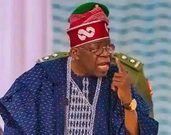
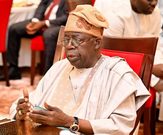
President Bola Tinubu has defended his administration’s plans to secure fresh external loans, arguing that the economic value of projects financed with borrowed funds matters more than the amount borrowed.
The President identified the Lagos-Calabar Coastal Highway, Sokoto-Badagry Superhighway, Trans-Sahara Superhighway, electricity grid upgrades and the modernisation of major commercial ports in Lagos as key infrastructure projects expected to strengthen Nigeria’s productive capacity.

Tinubu said the proposed investments would support economic growth, create employment opportunities and improve the country’s ability to attract private investment.
His position comes amid criticism from the Nigeria Labour Congress (NLC), which has questioned the Federal Government’s request for National Assembly approval to obtain additional external loans of approximately $20.5 billion and €1.45 billion.
In a statement titled “From Reforms to Delivery: Our Infrastructure Investment and Growth Strategy,” the President maintained that borrowing should be assessed by the value it generates and the lasting benefits it delivers to Nigerians.

“The real question is not how much we borrow, but what we build, what value we create and what future we leave behind,” Tinubu said.
Major Infrastructure Projects Expected to Boost Economic Growth
According to the President, the proposed infrastructure investments are intended to connect economic centres, reduce transportation costs, improve trade and unlock the agricultural and industrial potential of different regions.
He said the Lagos-Calabar Coastal Highway could reduce logistics costs along its route by 15 to 20 per cent and potentially contribute up to two per cent to Nigeria’s Gross Domestic Product (GDP) through increased trade, tourism and industrial activity.
The project is also projected to create approximately 100,000 direct jobs in construction and engineering, alongside more than 150,000 indirect jobs in logistics, building materials and related services.
Tinubu said the infrastructure programme goes beyond road construction, describing the highways as economic corridors capable of connecting markets and supporting new industries.
“We are not simply building highways, we are opening economic corridors, connecting markets, unlocking industries and reshaping Nigeria’s economic geography,” he said.
He added that achieving the administration’s ambition of building a $1 trillion economy by 2030 would require infrastructure capable of supporting a much larger and more productive economy.
“We cannot build a $1 trillion economy with infrastructure designed for an economy a fraction of that size,” the President stated.
Tinubu also identified investments in healthcare, education and vocational training as important complements to physical infrastructure, saying they would help improve productivity and expand opportunities for Nigerians.
Tinubu Cites Economic Indicators to Defend Reforms
The President said economic reforms introduced since May 2023 had helped improve macroeconomic stability, strengthen public finances and restore confidence in Nigeria’s economy.
He cited real GDP growth of 4.43 per cent in the second quarter of 2026 and a decline in headline inflation to 14.63 per cent in September, compared with 20.98 per cent in the corresponding period a year earlier.
Tinubu also reported that Nigeria’s gross external reserves had increased to $55.1 billion as of October 9, 2026, including approximately $46 billion in net reserves.
He further stated that the country’s tax-to-GDP ratio had risen from seven per cent to 12.5 per cent.
According to the President, these developments reflected the effects of policies including petrol subsidy removal, exchange rate unification, tax reforms and coordinated measures to address inflation.
“The decisions taken since 2023 were difficult but necessary,” he said.
Tinubu argued that the reforms had improved Nigeria’s capacity to attract investment and finance projects that could support long-term economic development.
He also claimed that the country’s borrowing conditions had improved as investor confidence strengthened.
“Confidence has a price; our cost of borrowing is going down, and the country risk premium has drastically decreased,” he said.
The President pointed to assessments by international credit rating agencies and other financial institutions as evidence of improving confidence in Nigeria’s economic management.
He said stronger reserves and improved financial credibility could help the country attract institutional investors, secure longer-term financing and reduce borrowing costs.
Government Seeks to Link Borrowing to Long-Term Returns
Tinubu said his administration was moving away from using public borrowing primarily to address immediate fiscal pressures and towards financing investments expected to generate economic returns.
He explained that longer-term financing arrangements could align loan repayment periods with the useful life of infrastructure assets, helping to reduce refinancing pressures and secure more competitive funding.
According to him, the objective is to ensure that borrowed funds support projects that create jobs, expand economic activity and deliver lasting benefits to future generations.
The President said the government must translate improved international confidence into capital expenditure, completed projects and measurable improvements in living standards.
Tinubu Outlines Five Economic Priorities
The President outlined five priorities for the next phase of the Federal Executive Council’s economic strategy.
They include improving food affordability and energy price stability; strengthening budget harmonisation and fiscal discipline; completing high-impact projects and investing in critical infrastructure; improving economic policy and regulatory efficiency; and providing targeted household support alongside investments in human development.
He said the administration’s performance should ultimately be judged by the number of projects completed, the level of investment attracted, jobs created and improvements in the welfare of citizens.
“Securing financing is not the achievement. Completing the project, delivering value and improving the lives of Nigerians is the achievement,” Tinubu said.
He added that Nigeria’s economic ambitions must be supported by responsible borrowing and investments capable of generating sustainable returns.
NLC Questions Need for Additional External Loans
Despite the President’s defence of the borrowing plan, the Nigeria Labour Congress has challenged the Federal Government to explain why it needs additional external loans despite claims that government revenue has increased following the removal of the petrol subsidy.
NLC President Joe Ajaero raised the concerns during an appearance on Channels Television’s The Morning Brief, questioning the justification for continued borrowing from international financial institutions.
Ajaero argued that the government’s claims of increased revenue and higher allocations to states should be accompanied by a clear explanation of why further loans remain necessary.
“If you come out to tell us that subsidy is gone, that you are making more money and then you are giving more money to states, what is the justification for continually borrowing from the International Monetary Fund and the World Bank and other agencies when there is enough money?” he asked.
The labour leader warned that continued borrowing could increase Nigeria’s debt burden and questioned whether loans obtained from international institutions necessarily served the country’s best interests.
Ajaero Cites Higher Oil Prices in Borrowing Debate
Ajaero also pointed to rising crude oil prices, which he linked to tensions in the Middle East, as a reason for the government to reconsider its borrowing plans.
He questioned whether additional loans were necessary when oil prices were reportedly trading above the $70-per-barrel benchmark used in preparing the 2026 budget.
“If the 2026 budget was prepared with crude oil price benchmarked at $70 per barrel and now sells above $100 per barrel due to the US-Iran crisis, should this country still be taking loans?” he asked.
According to Ajaero, higher oil earnings and increased revenue accruing to oil-producing states should prompt the Federal Government to provide a detailed explanation of its financing requirements.
However, he clarified that the NLC does not have the authority to approve or reject government borrowing, noting that such decisions rest with the relevant institutions.
He urged Nigerians and oversight agencies to demand greater transparency and accountability over the proposed external loans.
The debate highlights competing positions over Nigeria’s borrowing strategy: the Federal Government maintains that external financing is needed to deliver infrastructure and support economic expansion, while organised labour is demanding stronger justification for additional debt amid claims of rising public revenue.